Back to Tiburcio Vasquez Driving Tour
The Life and Times of Tiburcio Vasquez
Born in 1835 in Monterey, California, a sleepy hamlet of adobe buildings and a customs house with around one thousand inhabitants. Soon to be the capitol of all of California, it maintained a population of around 1000 inhabitants until nearly 1880 - born in land belonging to Mexico most recently as it achieved independence from Spain, then the gold rush and finally statehood. Turbulent times describe his life's arch and are examined through his reported deeds in an effort to help 21st century eyes change focus to a 19th century setting in the now Golden State.
Story 1 of 8
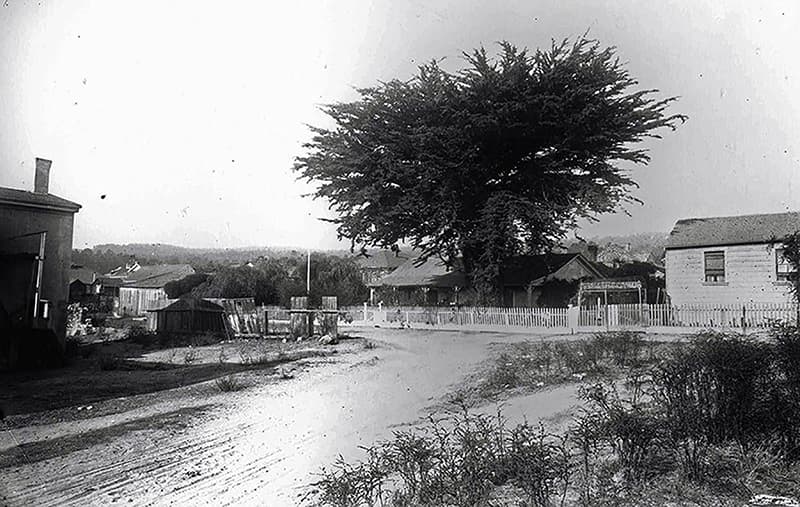
The life of California's most successful bandit is difficult to comprehend when looking through a modern day lens. When he is born into the prominent Californio Vasquez family as the ninth child, he lives the life of a landowning son on a hill overlooking the magnificent bay of Monterey, a man of the soil of the land, un hijo del pais.
In 1835, the entire state of California is divided between rancheros with "cattle on a thousand hills" to quote Cleland. The trade is in hides and tallow from the cattle and horses which have prospered and been fine-tuned as they descended from the earliest Spanish import when the Spaniards claimed California as their own and endeavored to populate it and defend their new find. It is difficult to populate such an outpost as early California, the alta or top of Baja California. The first inhabitants are brought overland from Mexico led by conquistadors searching for safe harbors and good land for crops. They found places where the natives had thrived for centuries and one by one, they inhabited them.
One hundred years before Tiburcio is born, there are only native americans, first peoples, who have a population of over 300,000 by modern archaelogical judgements with over 300 distinct dialects spread across as many tribes who had occupied and lived off the land for over 10,000 years. Within 100 years of the earliest occupation by the spaniards and sonoran settlers of early spanish california, those 300,000 were decimated by diseases and numbered less than 80,000. Similar to other areas isolated from "new world" maladies like measles and smallpox and venereal disease, their unprotected immune systems were overwhelmed.
1769 marks the first effort of the Portola expedition, tasked with finding the great bay Vizcaino described to the king of Spain after exploring by ship the new land above Baja California. The colonies of britain on the east coast are surviving and growing and becoming increasingly displeased with their home country but will not strike out for independence for another few years. There is no United States of America when Spain claims California, only a set of colonies becoming increasingly banded together by what they perceived to be intolerant acts by their protectors and trading partners.
Based upon Vizcaino's glowing report of a wonderfully sheltered and wooded bay fed by an excellent flowing river, the search was on. Geo-location at the time is a difficult and imprecise proposition with latitude being the most difficult. Gaspar de Portola is tasked with leading a group of willing sonoran (norther mexico) farmers and cattlemen to the new land. They will form the basis of the new formed town called Los Rios de la Porciuncula de los Angeles in the coming decades and the name will be shortened from the church St. Francis outside of Assisi built and will grow from the small and dusty town on an unfaithful and seasonal river to the unhinged city of millions we know today. They will find Monterey bay but realize it is not the protected sanctuary Viscaino described. Quite by accident, they will stumble upon one of the best harbors on the planet when they crest a hill near San Jose and see the great inland sea that is San Francisco bay.
Spain will hold on to its "difficult to defend and populate" province in alta california until 1821 when Mexico achieves independence from Spain. Land had been granted to military personnel under the spanish when officers requested it in their twilight years after a long life of rough service in a hostile land with little connection to the rest of the outside world. Only 20 land grants were awarded under the spanish system compared to over 600 land grants awarded by various governors of mexico as the missions erected and run by the franciscans were secularized and their valuable holdings divided up. Being a friend of the governor and an "hijo del pais" or "man of the country" helped. Foreigners were also granted land providing they converted to catholicism and married or were of great assistance to the governor.
It is hard to fathom how few people aside from the quickly disappearing tribes of natives populated california before the gold rush of 1849. Maybe fewer than 15000 whites (nearly all of spanish descent) and 80000 natives, most of whom were working and dying in missions or doing their best to stay away from them.
The places we know today as San Diego or San Francisco or Sacramento or Santa Barbara and Ventura, like Los Angeles have only hundreds, not thousands or millions of people. Missions about 25 miles, or a day's walk, in between are founded in the 1770's by the franciscans after the jesuits are asked to leave spanish frontier holdings in california and while Portola is working up from Sonora with a train of leather backed soldiers and hopeful families of settlers, a little franciscan friar with a damaged leg is due to meet him with his own band of settlers, coming up the entire length of Baja California from Mulege and Loreto. Their plan is to build missions, teach and teach the natives agriculture and convert them to a new God and save their souls. The variously skilled settlers walk from native encampent to native encampment looking for good places to farm and live. All by the coast or very near inland. Go 20 miles from the pacific and you will find only bones and native tribes, no western settlements existed.
Tour Route
You are here
Story 1 of 8
Experience This Story On Location
Download the History Cake app to experience this story with automatic audio narration as you visit the location.