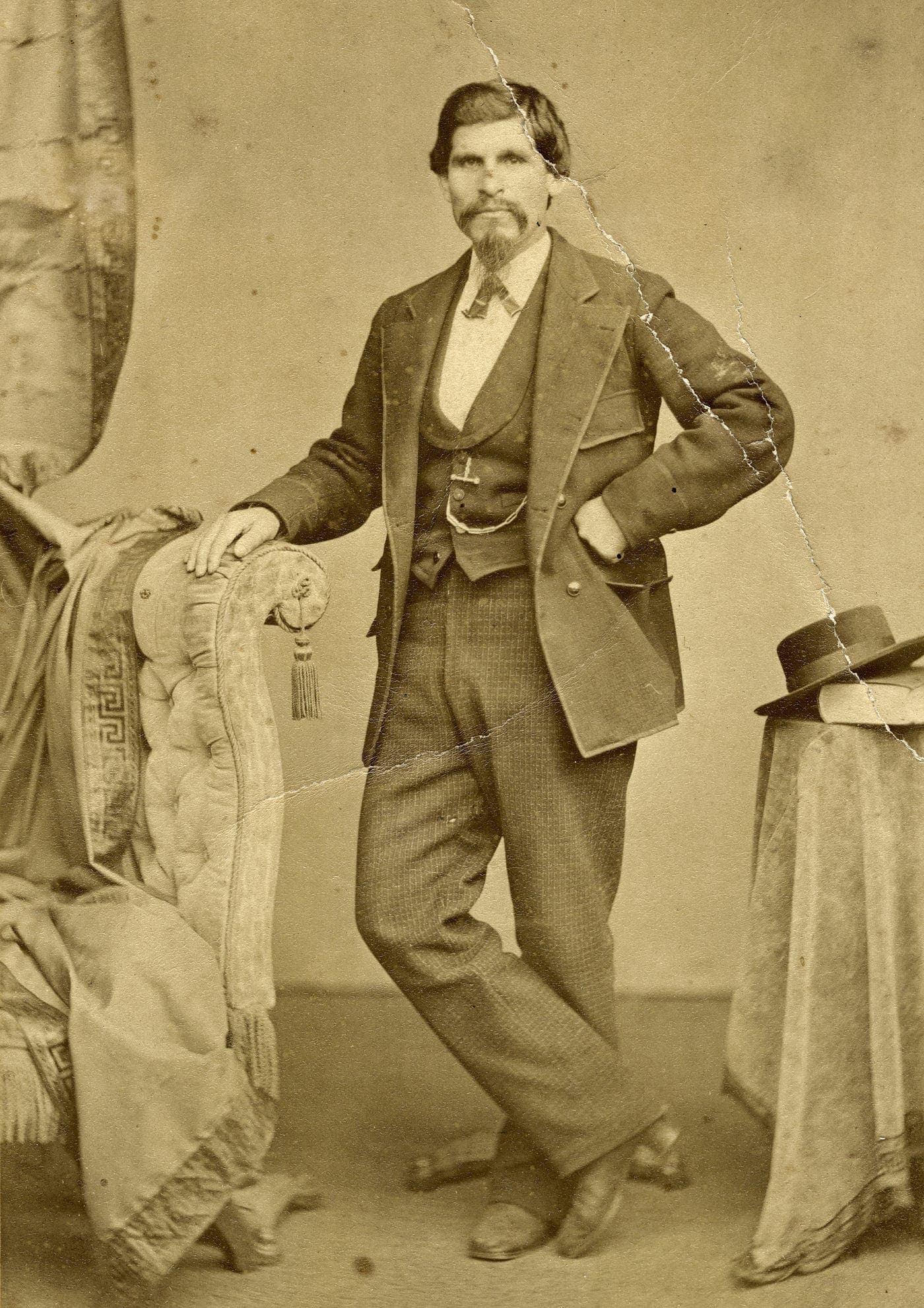
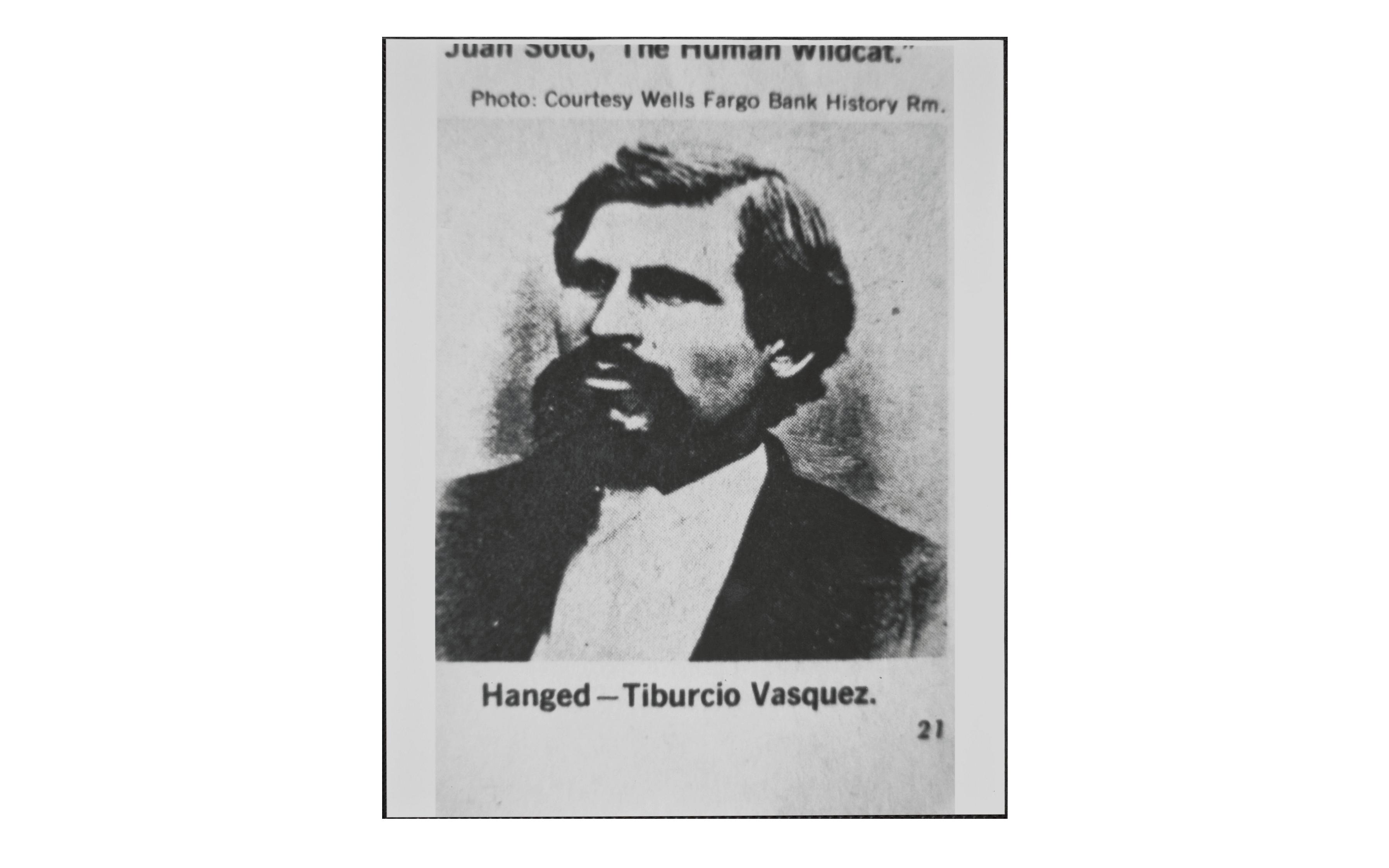
This is a series of historical photographs and audio files related to the life and the times of Tiburcio Vasquez, a bandido in California as it comes to statehood.
The stories trace his path through an alta California with only perhaps 15,000 "non-native" residents across its entirety and along still lonely horse trails in forgotten valleys of days gone by. From his birth into a well respected family overlooking the bay in Monterey, the capitol of the state at the time, to the el camino real and stagecoaches and central valley hold-ups to his final demise on the gallows in San Jose.
Download the History Cake app to explore this collection on location. Get automatic audio narration as you travel.
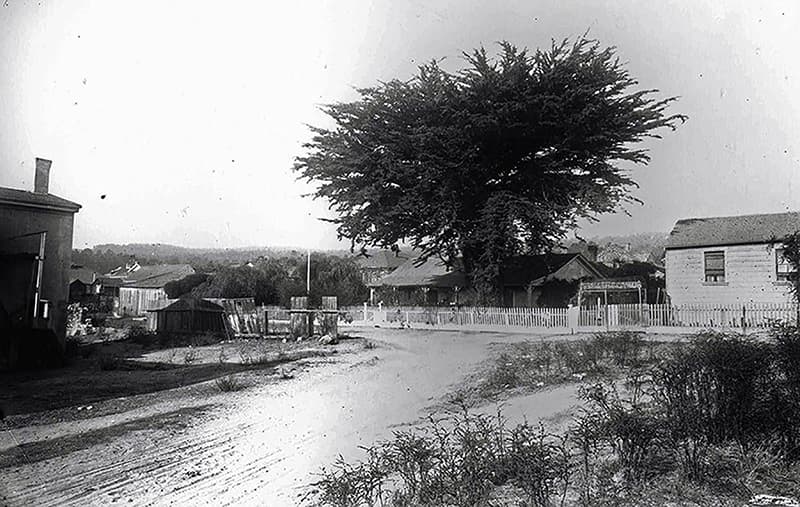
Born in 1835 in Monterey, California, a sleepy hamlet of adobe buildings and a customs house with around one thousand inhabitants. Soon to be the capitol of all of California, it maintained a population of around 1000 inhabitants until nearly 1880 - born in land belonging to Mexico most recently as it achieved independence from Spain, then the gold rush and finally statehood. Turbulent times describe his life's arch and are examined through his reported deeds in an effort to help 21st century eyes change focus to a 19th century setting in the now Golden State.
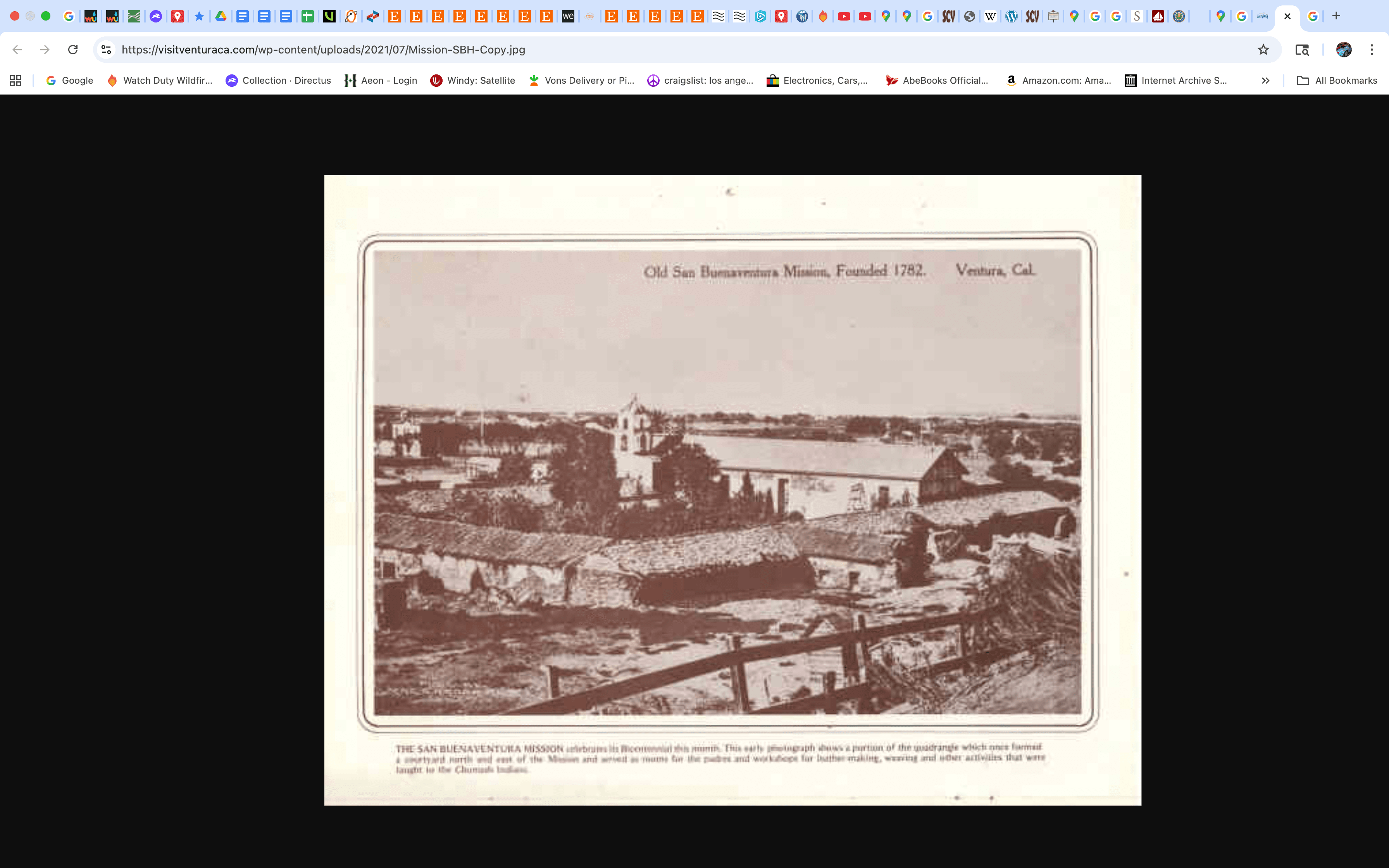
Tiburcio works for Poli, owner of the lands of the Mission San Buenaventura, nearly 50000 acres and Tiburcio shears sheep as a borreguero. He has come south from Monterey and Salinas as he is a person of interest in the murder and robbery of ranchers Willamson and Wall west of present day Gonzalez.
A small village or jacal leftover from the Californio days along the trail to Sonora used by horse traders for centuries. This would be a regular place to water horses or change them and continue along your way. Very few anglos even 20 years after statehood.
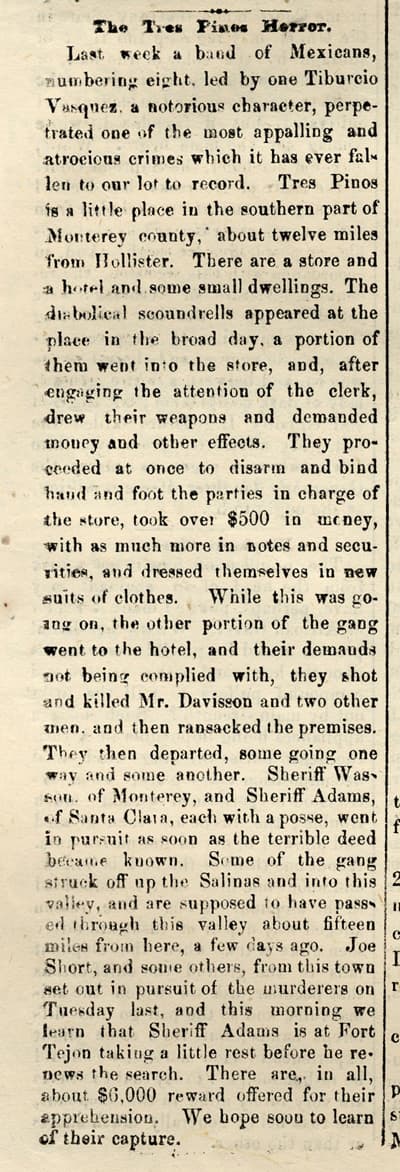
Site of the murder for which Vasquez was convicted and hung. Small town at the meeting of the road to Panoche and the New Idria mines meets SR 25. 1873 8-26. Tres Pinos in the days of Tiburcio, location of Snyder hotel with store next door. robbery and murders - Tiburcio uses a henry rifle and kills two. pps 213-223; diag 217
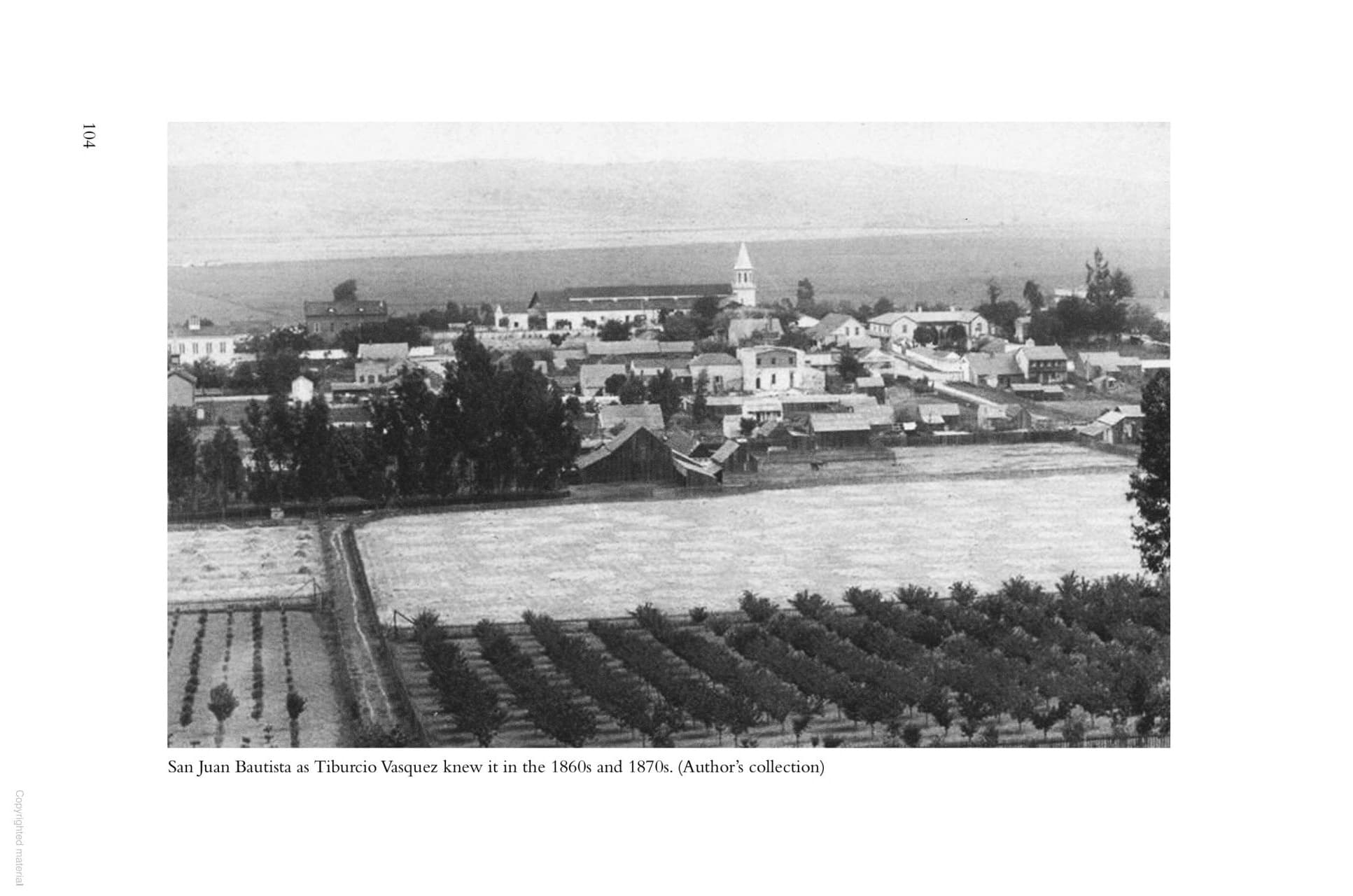
The plaza was the gathering place for the small and historic town of San Juan. Built on a fault scarp of the San Andreas, the town seems more frozen in the time of the pastoral days of the Californios and their cattle on a thousand hills. The mission was founded by Father Lasuen in the 1700s and this central plaza hosted fandangos and bull and bear fights and gentle summer evenings under moonlight and guitar accompaniment from the balconies of the enclosing buildings.
Southernmost village in a chain of them along the western foothills of the San Joaquin valley. Watering holes which began as native american village sites and in the early days of statehood for California, were mainly inhabited by Californios and Sonorans and natives or a blend thereof.
Tiburcio's mother, Dona Guadalupe moves here from Monterey in 1860 and Tiburcio is released from San Quentin in 1863. He will come to pastoral San Juan and work as a vaquero on the ranches nearby until 1867.