Back to HistoryCake Driving Tour - Hwy 14-395 - Introduction and Overview
Randsburg
Old mining town north of Kramer Junction and south of China Lake/Ridgecrest and Trona. Famous for the Yellow Aster gold mine and nearby Atolia for tungsten and silver production around Red Hill and Johannesburg. Founded in 1895 and suffers devastating fire in 1897
Story 18 of 37
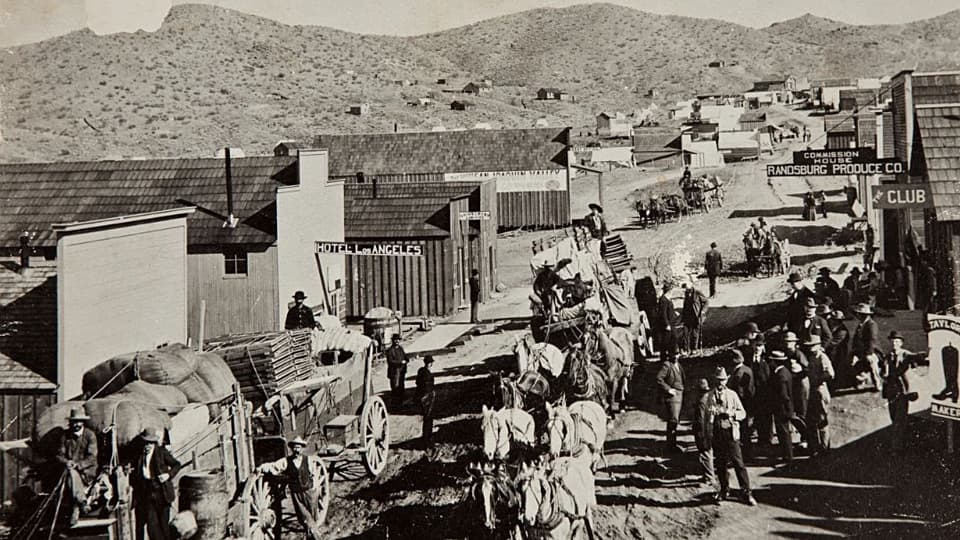
Gold was discovered by Frederic Mooers, John Singleton and Charles Burcham[9] at Yellow Aster Mine on 25 April 1895 and a mining camp quickly formed named Rand Camp. Both mine and camp were named after the gold mining region in South Africa.[6]
The Yellow Aster was the first of many gold mines that quickly developed around Rand Camp. The Rand Mining District was created on 20 December 1895. By the end of 1896, the camp was renamed to Randsburg and more than 1500 people lived there.[9] The first post office at Randsburg opened in 1896.[6] By October 1897, the mining district had produced over $600,000 of gold. In 1899, the first stamp mill opened at Yellow Aster.[9]
To expand production at Yellow Aster, a well was dug at Goler and water was pumped up to the mine serving a second mill. This and other district mines were making substantial profits, but pay for the workers was poor and a strike was called in 1903. Yellow Aster's production declined during the First World War, and it closed in 1918. It reopened in 1921 and worked intermittently until 1933 when it was taken over by the Anglo-American Mining Corporation, who sold it in 1940 to John Cummings & Co who worked it until 1956.[9]
In 1983, Glamis Gold purchased Yellow Aster. They untopped the mine. By 2006 all remaining gold-bearing rock had been extracted, and operations ceased for the final time.[9]
Tour Route
You are here
Experience This Story On Location
Download the History Cake app to experience this story with automatic audio narration as you visit the location.