Back to Saint Francis Dam Driving Tour
St Francis Dam disaster overview - Dam base location: 11:57 PM 3/12 to 5:30 AM 3/13/1928; 55 mi.
Three Minutes to a March Midnight...
Santa Clarita, CA1928-03-12Story 1 of 14
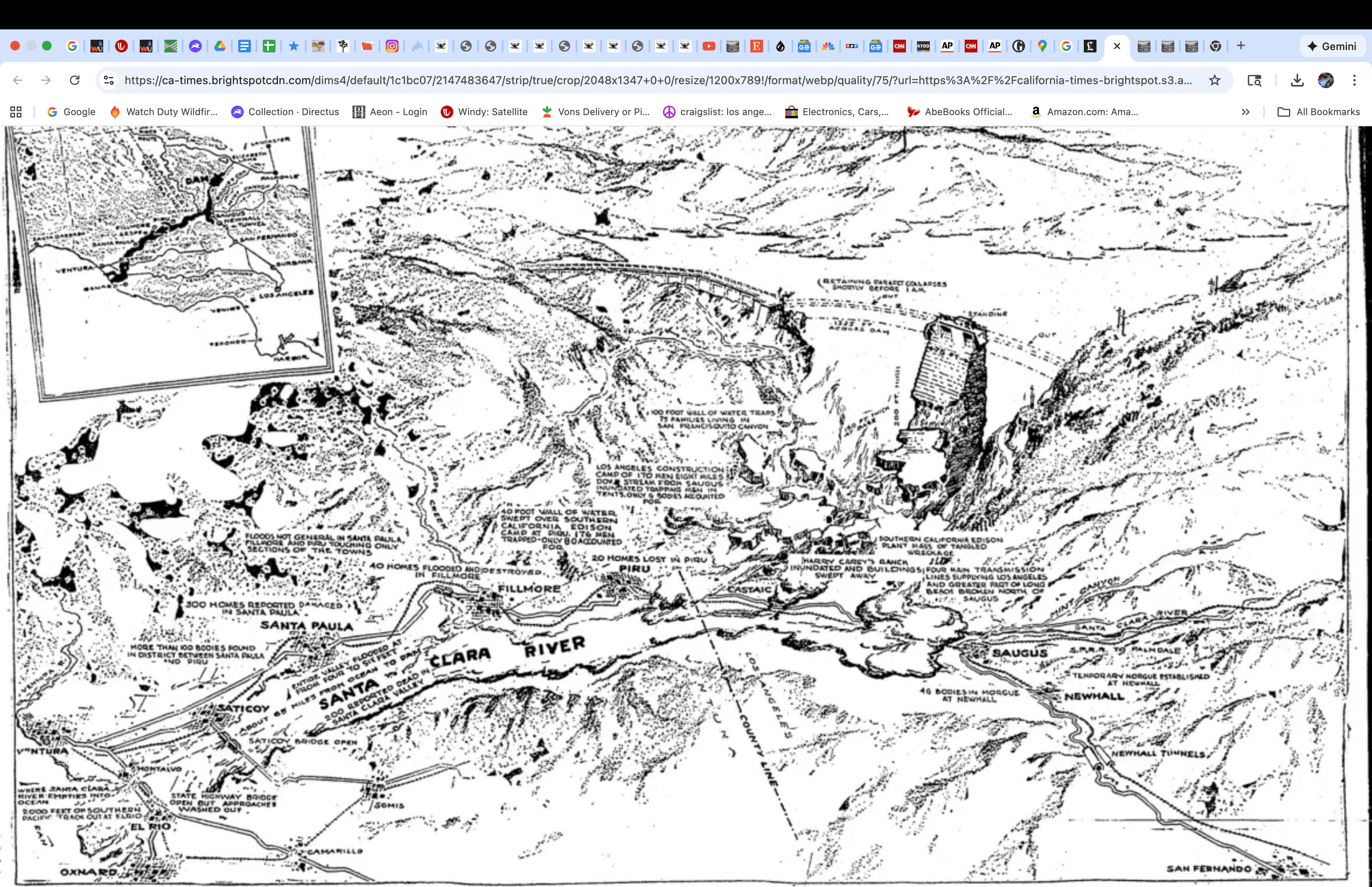
This is the story of the second greatest catastrophe in California in terms of loss of human lives. The San Francisco earthquake and subsequent fire of 1912 is the only event of greater tragedy in the history of the state.
The story begins with a city wishing to continue its growth rate in population and the capturing of a water source hundreds of miles north and the need to store that water for times of drought in a land where rainfall averages less than 15 inches per year.
The first step was securing lands and their water rights from the ranchers of the owens valley, then floating a bond which the voters of los angeles approved, then constructing an aqueduct and after that, reservoirs created by dams to save the water re-routed from the owens river.
The dam was planned, approved and built, then built up some more. It leaked then it failed and just before midnight on a cold March evening in 1928, it sent billions of gallons of pent up water from Santa Clarita to the Pacific Ocean in Ventura in one fell swoop - it sent the water 50 miles and five hours west as the flood gushed and spread into an unstoppable behemoth laying waste to nearly all it confronted and overwhelmed and killed hundreds in the process.
The dam was slightly over 180 feet tall and nearly filled to capacity with over 12 billion gallons of owens valley water when the torrent was unleashed. The initial mass of water and debris and mud would scour the canyon sides of all vegetation for a height of over 100 feet from the canyon floor just below the dam. The canyon floor was where the dam keeper and his family lived and that same canyon floor a mile further west was where the workers and crew and families of the powerhouse #2 station lived. Nearly all perished within minutes of the failure and their bodies were pulled along downstream and in some cases never recovered.
The first town along the flood route was Saugus and from there, Castaic Junction, Camulos Rancho, Fillmore/Piru, Santa Paula and finally Ventura and Oxnard where it turned the sea a muddy brown. In the following days, bodies would wash in to the beaches all the way south to San Diego...
Construction and filling of the reservoir detail.
Aqueduct detail.
Mulholland and Eaton and Van Norman detail.
Former location of San Francisquito Dam before it's failure at 11:57 p.m., March 12, 1928. 12.4 billion gallons drained out of San Francisquito reservoir in an hour and ten minutes. The water line of the former reservoir can be seen on the face of the mountains in the photo taken the day after the disaster
Audio Narration
Tour Route
You are here
Experience This Story On Location
Download the History Cake app to experience this story with automatic audio narration as you visit the location.