Back to Saint Francis Dam Driving Tour
Rancho Camulos - 1:40 AM; 15 ft.; 21 miles downstream
Setting for Ramona - Helen Hunt Jackson and mistreatment of native population by mission system and rancho system. Largely spared from the flood because it sits on a small plateau, the slight elevation of which allowed the farmhouse and adjacent buildings to survive the 15 foot flood in the riverbed just below them.
Story 8 of 14
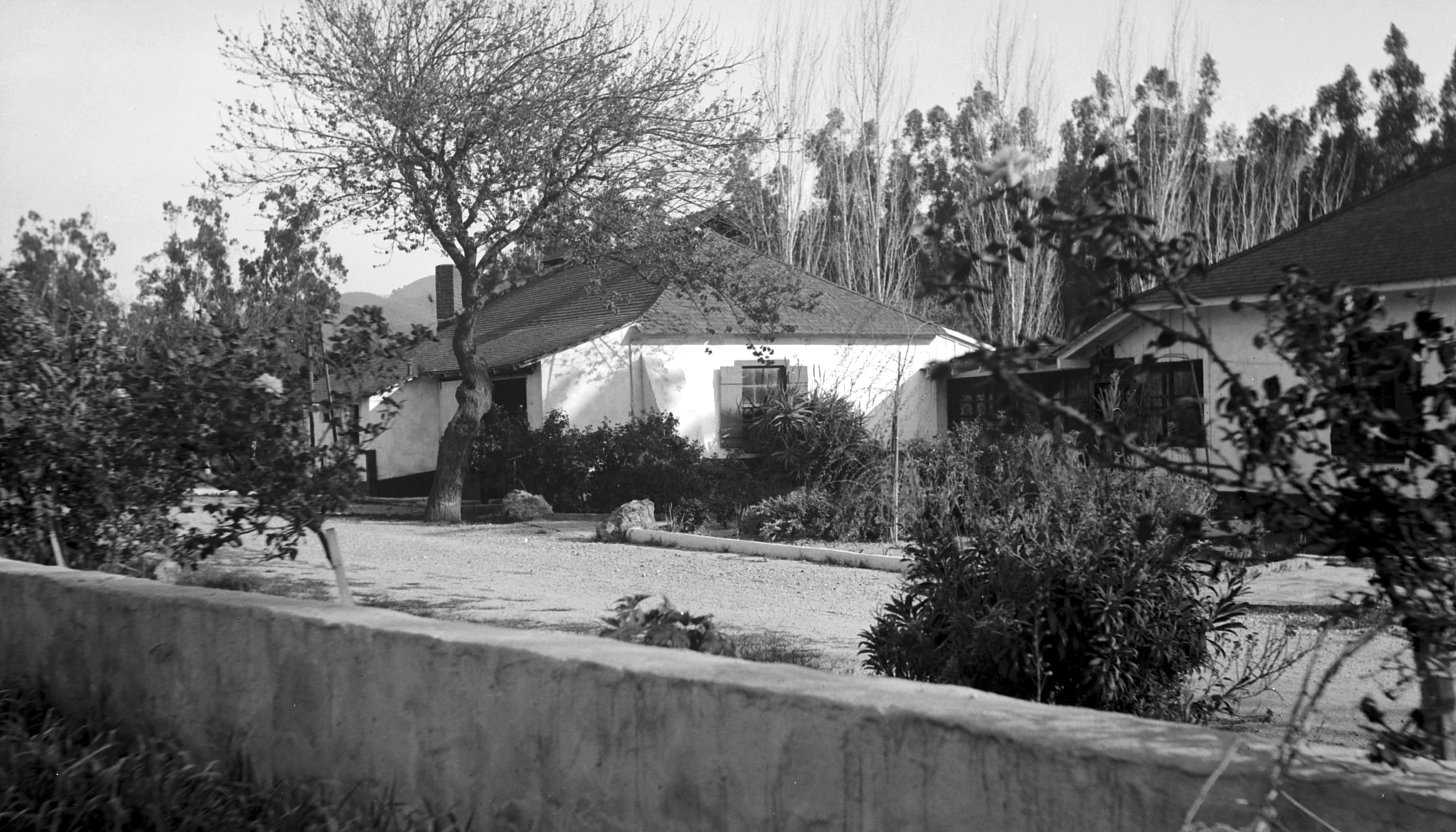
Setting for Ramona - Helen Hunt Jackson and mistreatment of native population by mission system and rancho system. Largely spared from the flood because it sits on a small plateau, the slight elevation of which allowed the farmhouse and adjacent buildings to survive.
On the night of March 13, 1928, there were 145 men—maybe as many as 185—sleeping at a work camp called Kemp, set up by the Southern California Edison Company on the slope of the dry bed of the Santa Clara River near an area known as the "Blue Cut" Promontory.
During the day, they were setting up new power lines; at night, they slept in tents.
But that one night, the enormous flood was coming from the St. Francis Dam break, raging on its way toward the Pacific Ocean. And by the time anybody knew enough about the danger to warn them, it was too late.
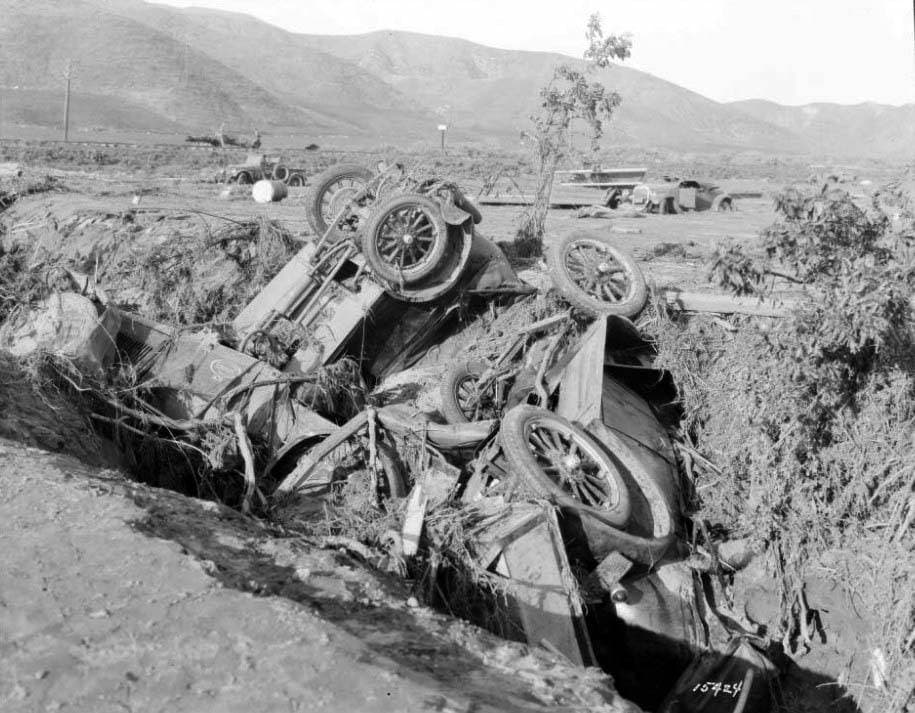
Most of them died, and nearly all of them were stripped of their clothing from the force of the debris flow.
The few survivors there were came to Rancho Camulos for help (and dry clothing).
Ranch owner August Rubel—a New York-born son of Swiss immigrants—and his wife Mary were awakened by a ranch foreman, who alerted them to a lot of water running through the normally dry river. The truth is that along its path, the water flooded over the river banks and—although no one lost their life at the ranch itself—created extensive damage to their agricultural operations (which included citrus orchards and cattle ranching).
The flood waters washed up past the old fountain that had been built in 1852 by Ygnacio Del Valle, the son of the original recipient of this westernmost part of the 48,000-acre Rancho San Francisco Mexican land grant in 1839—Antonio Del Valle. Both members of an important Californio family during the Mexican period and early California statehood, Ygnacio had inherited it from his father in 1841.
In fact, the water came nearly right up to the ranch house, sparing the dwellings by just inches. And while the fountain took a pretty big hit, the Rubels—who'd purchased the property in 1924—rebuilt it in 1934. (It was later restored in 2009.)
https://www.avoidingregret.com/2020/03/photo-essay-st-francis-dam-flood-plain.html
Audio Narration
Tour Route
You are here
Experience This Story On Location
Download the History Cake app to experience this story with automatic audio narration as you visit the location.