Back to Collections
Altadena Golf Course History
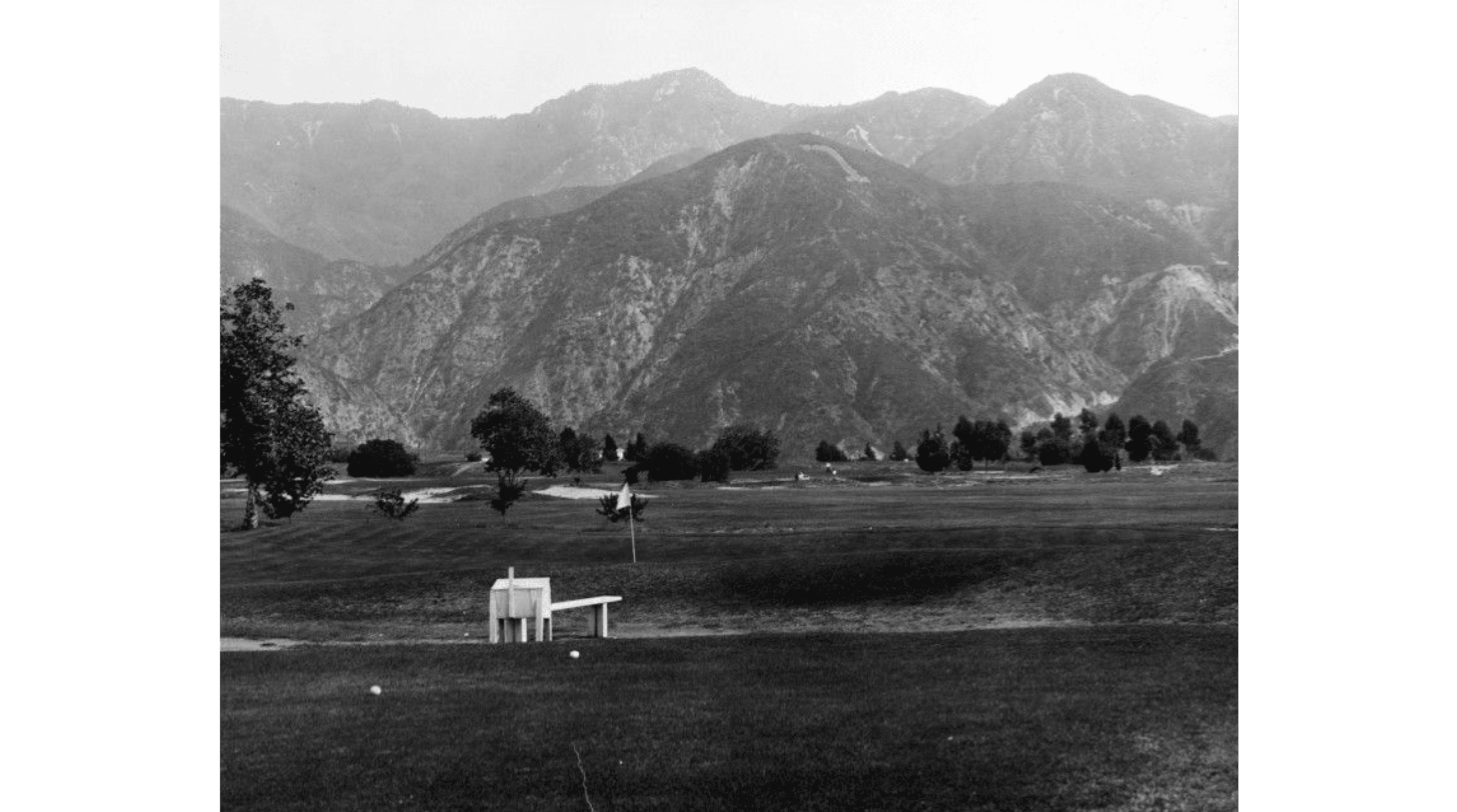
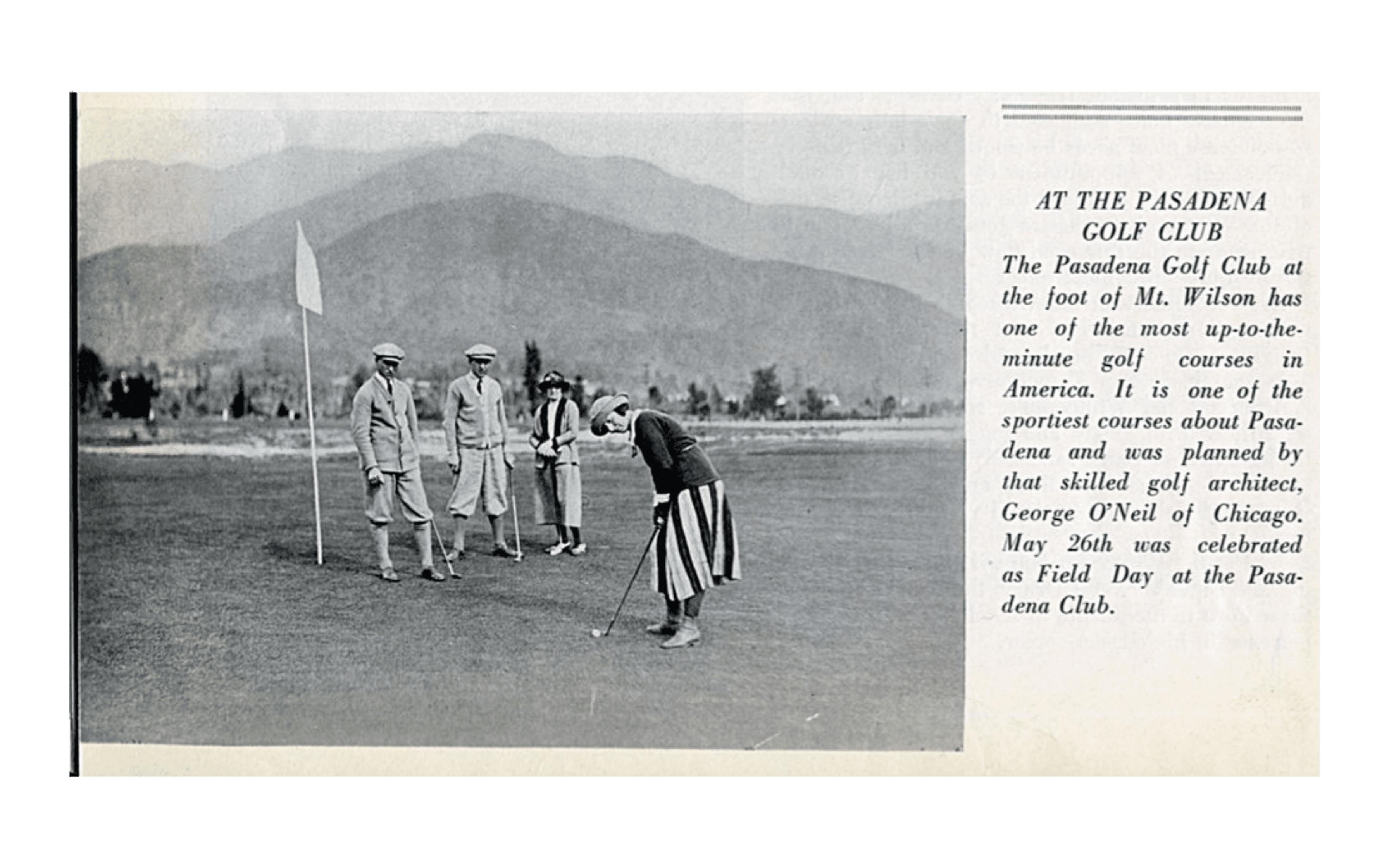
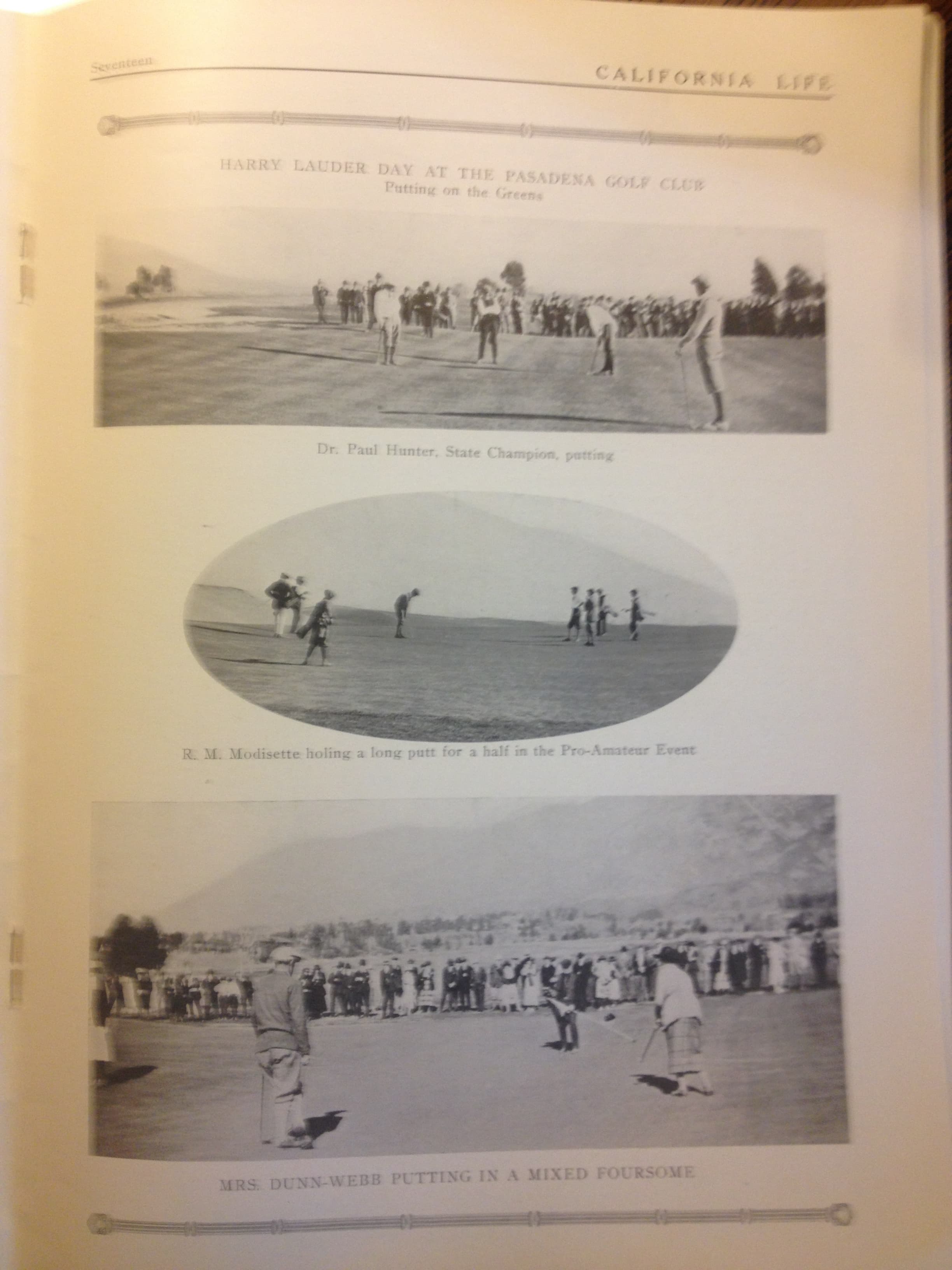
Construction begins in 1910 and officially open for play in 1911. In 1920, after a George O'Neil redesign, it is known to be one of the top courses in all of California and hosts several professional tournaments in the days of Gene Sarazen and Walter Hagen in the early 1920's.
12 stories2.4 km/ 1.5 mi1h 4mestimatedwalking tourFree
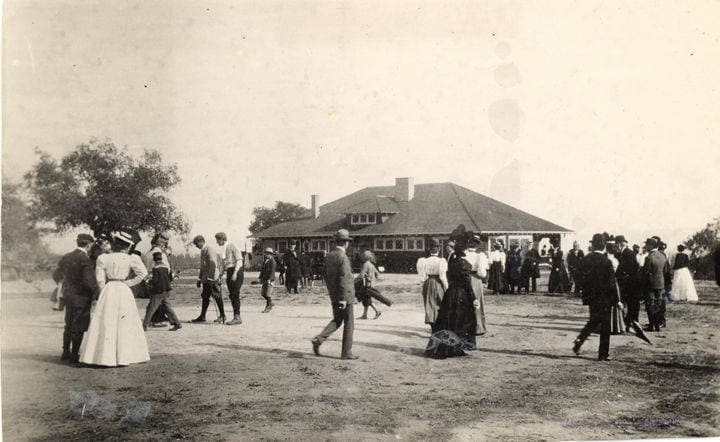
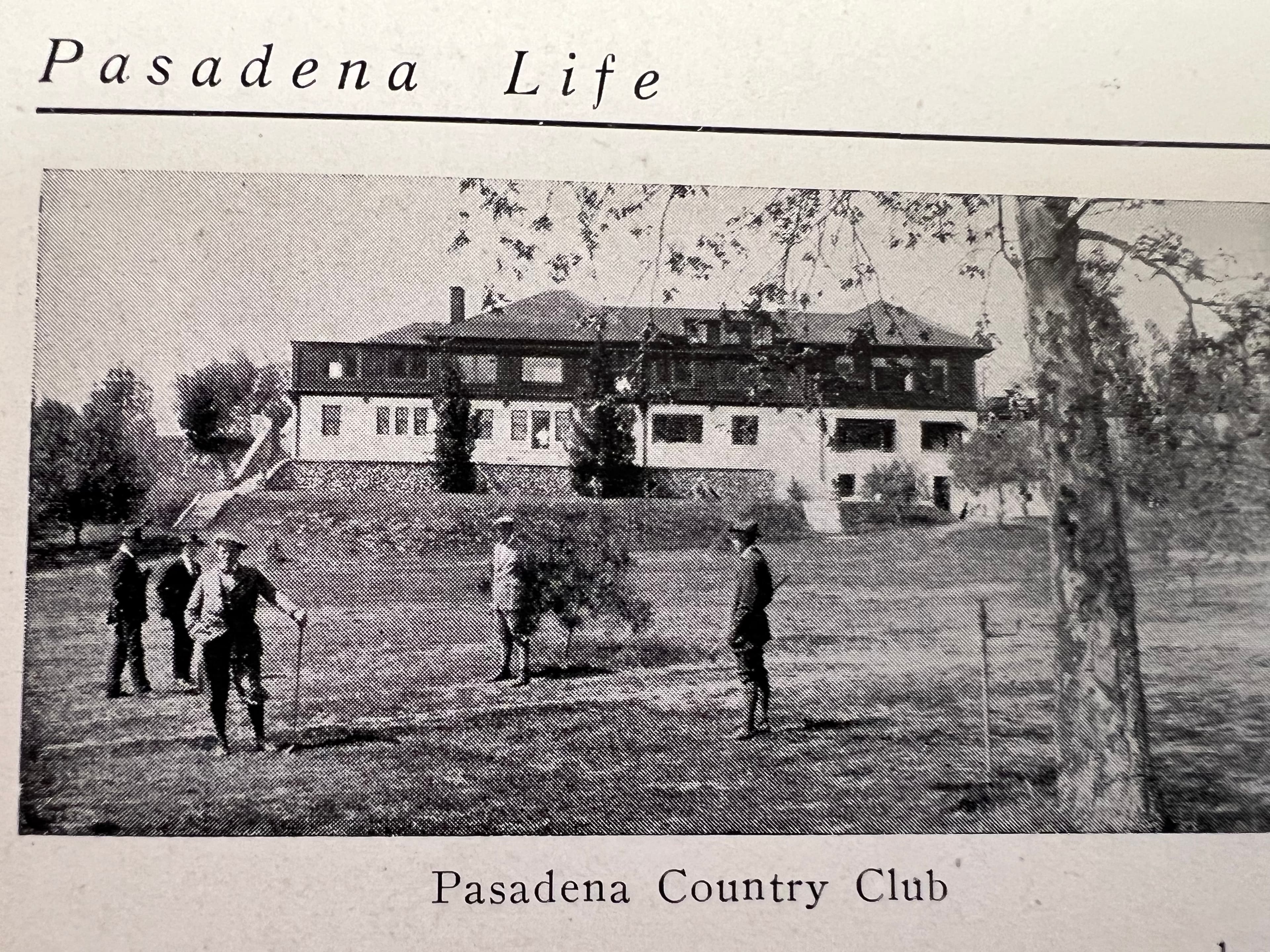
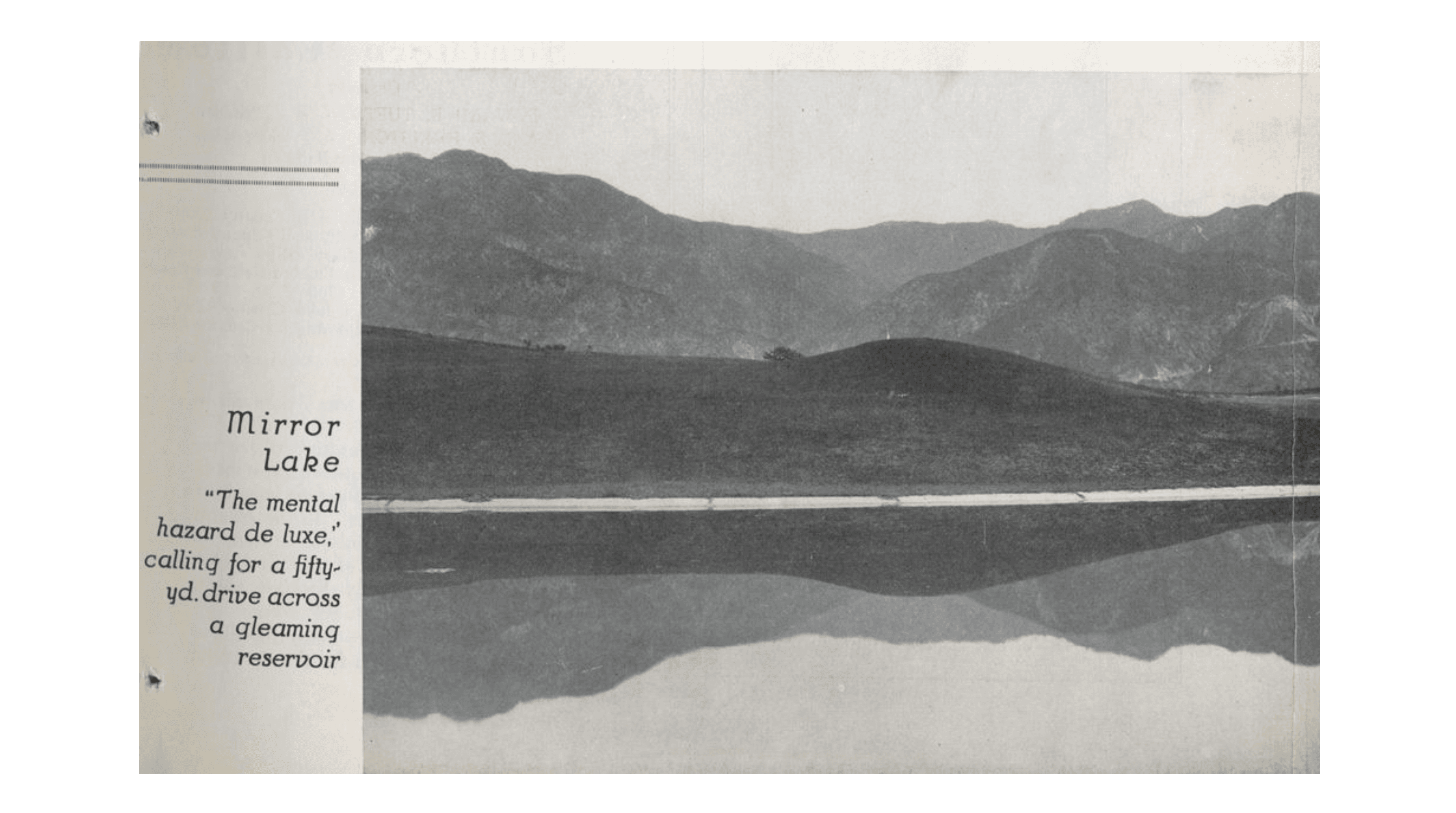
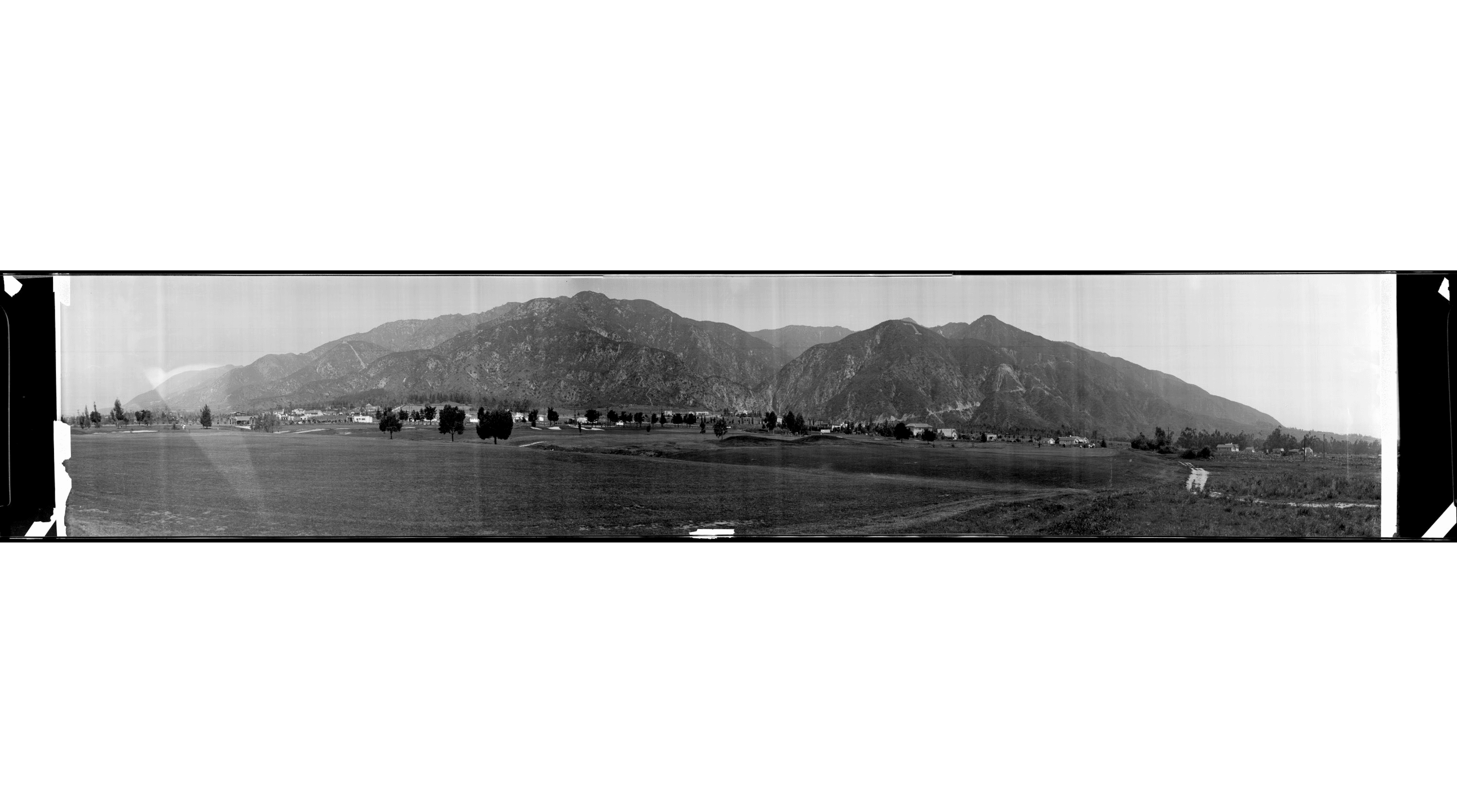
Formerly the bed of a wash, it drains well as the rains fall on the foothills in the morning and players can head out in the afternoon without ponding. The course and clubhouse were built by the Country Club as a place to get away from the bustle of the city and ride horses and hike in the mountains. Thaddeus Lowe's famous incline is still running at the time and streetcars can be taken from downtown pasadena to the course or to the base of the incline railway. As you walk up hole #9 in the present course configuration, you will see it nicely frames Echo Mountain and it doesn't take a lot of imagination to see the famed white city in your mind's eye as you stroll the fairway.
From 1911 through 1919, the Willie Watson designed course and routing had oil and sand greens for putting. Francis Ouimet winning the US Open at Brookline in 1913 boosted the popularity of golf in the states tremendously. The club prospered in its early years but World War 1 impacted finances and lives and there was little time and few people to relax at a leisure sport.
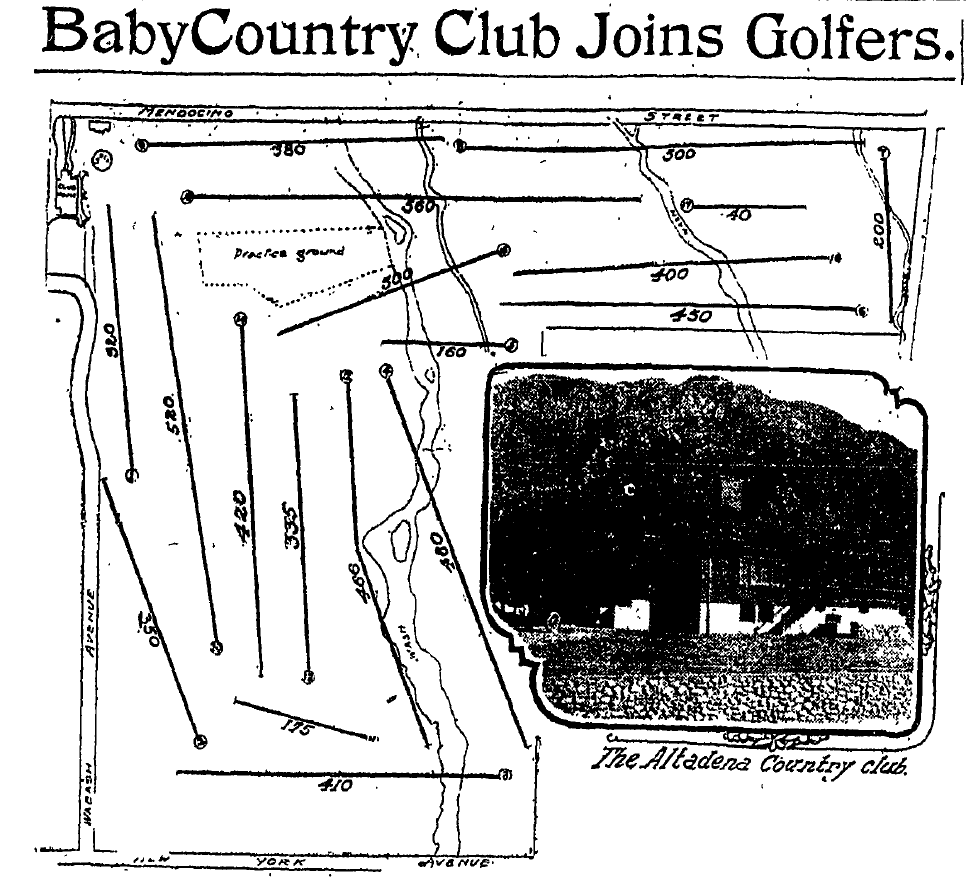
Jib Jones article: William Watson of Pasadena, Chicago, and St. Andrews, Scotland, started designing the original Altadena Country Club in February 1911 for J. B. Coulston, president of the National Bank of Pasadena and owner of the Maryland Hotel.
Coulston headed a group of hotel men and other “capitalists,” who had sold their Pasadena Country Club to H.E. Huntington, and hoped to ease overcrowding on the Annandale and Hotel Raymond links by forming a land association and buying 134 acres of the old Allen Ranch in Altadena as a replacement. They named it the Altadena Country Club.
The new clubhouse, 6466 yard eighteen-hole sand-green golf course, and two cement tennis courts, opened on December 28, 1911. Unfortunately, a freak sandstorm in February of 1912 blew the roof off the clubhouse, sending furniture flying in all directions, and greatly damaged the golf course. The next year a three day rain storm flooded and nearly destroyed the course, sending debris into Pasadena. Urgent reconstruction of the Rubio Wash channel through the course to control flooding delayed Watson’s full restoration of the damage, so they built a temporary nine-hole course north of Mendocino Street.
The restoration work was finished at the end of 1914. Watson himself became professional in 1915, while continuing to manage the Hotel Huntington (Pasadena CC) course.
The Altadena Country Club joined the Southern California Golf Association (SCGA) in 1915, and entered SCGA Team play in 1916.
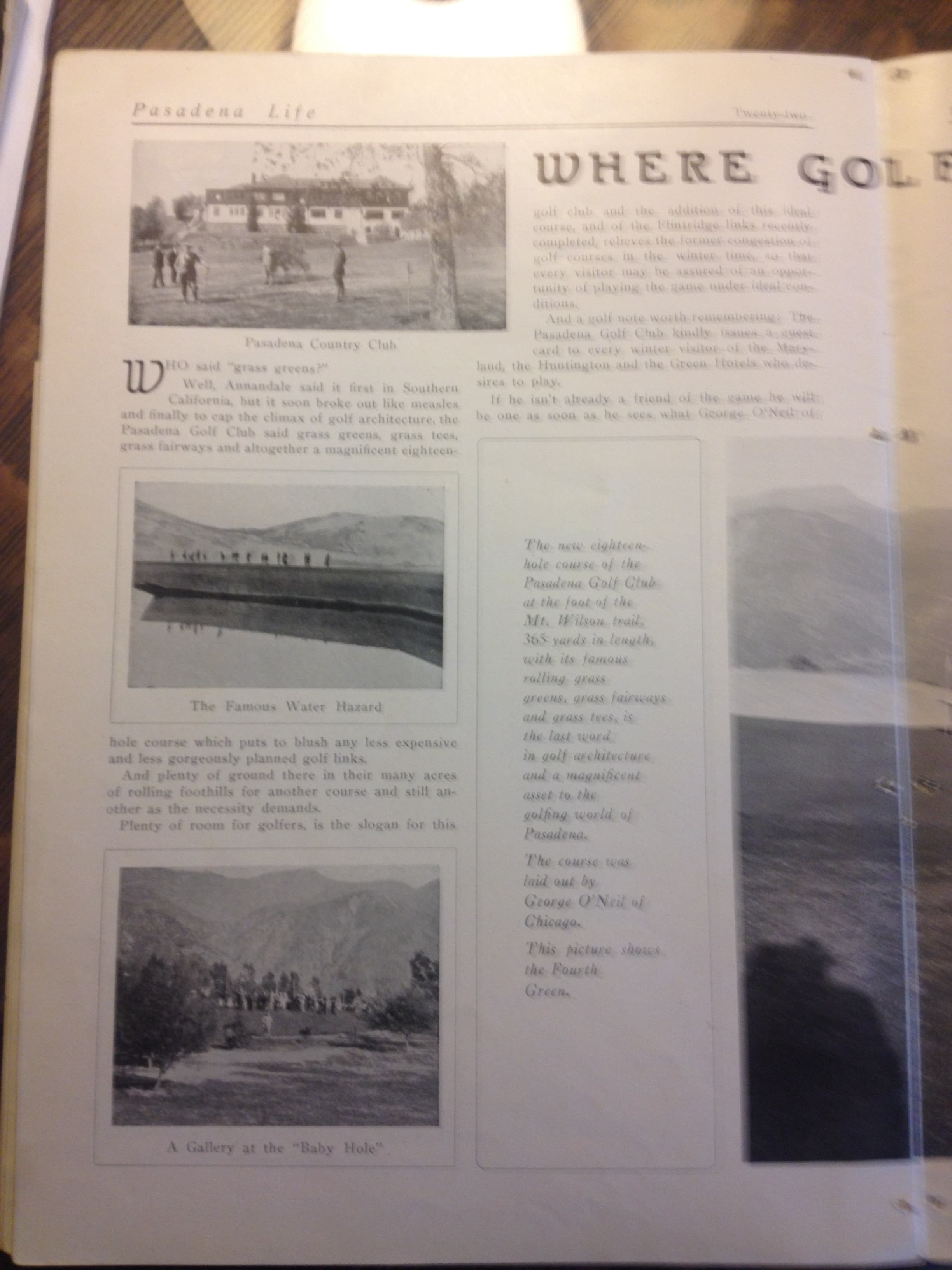
In 1920, J.B. Coulston and the California Hotel Company bought the Altadena Country Club, and planned $500,000 in improvements, with three eighteen-hole golf courses, and named it the Pasadena Golf Club.
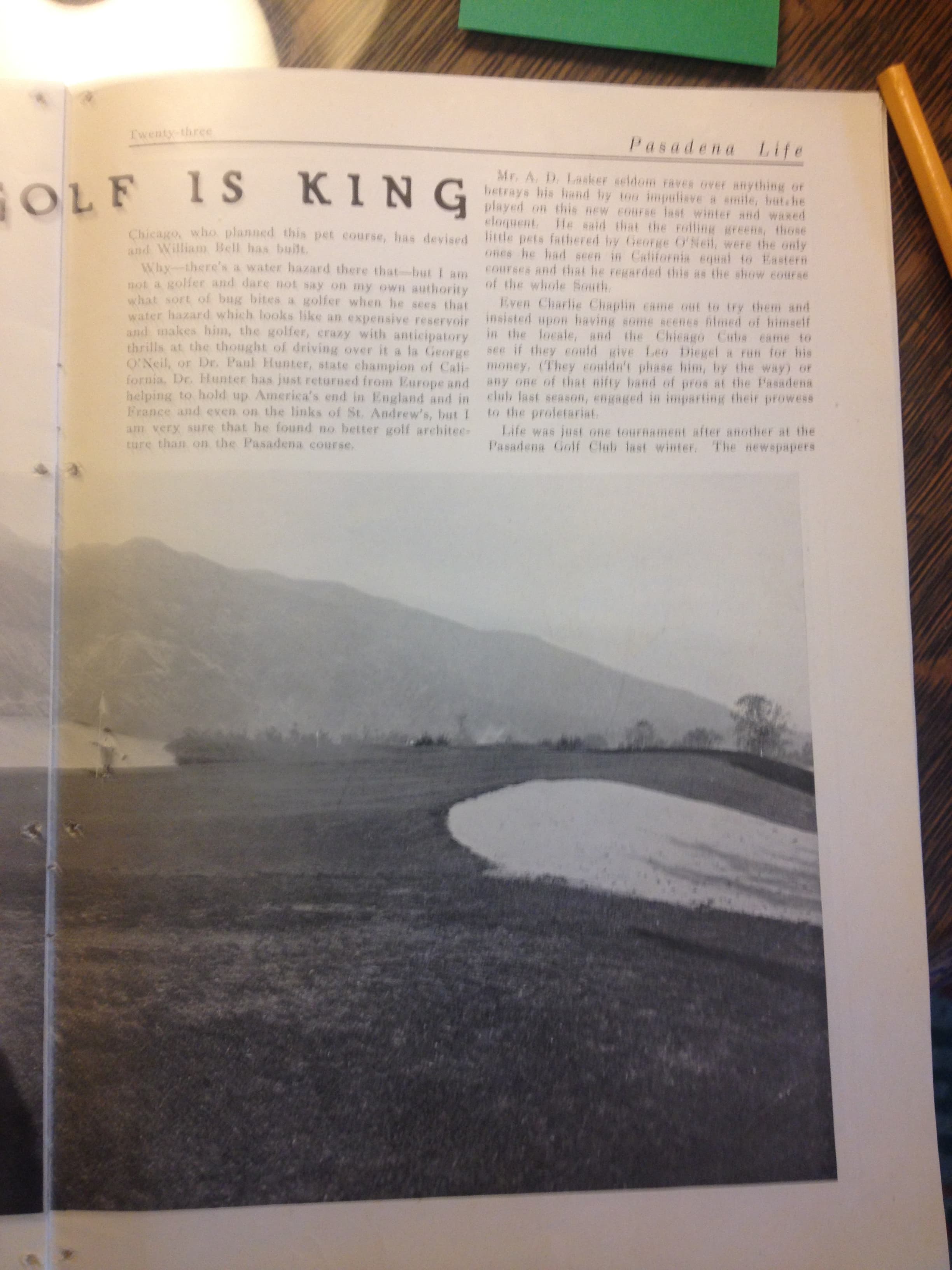
In a break with William Watson, George O’Neil, “golf expert of Chicago,” (Toledo CC, Beverly CC), and of the Pasadena Country Club, who had laid out Annandale Golf Club with Arthur Rigby (Los Angeles CC, San Gabriel CC, Santa Anna CC, ) and Al Naylor (Hotel Green, Annandale GC, San Gabriel CC), was hired to layout the new courses. His assistant was Jack Croke, of Chicago’s Exmoor club. Croke built the new course with William P. Bell, who had previously been Caddiemaster, and then Ground Superintendent, at Annandale Golf Club.
The first nine-holes of the new Pasadena Golf Club opened on October 31, 1920, and the second nine in December. It was the first golf course in Southern California with undulating grass greens. William P. Bell became Superintendent of Pasadena GC in 1921, and Bell and Jack Croke teamed up to rebuild the greens at Annandale in 1922, and at the new Rancho Golf Club in 1923.
The Pasadena Golf Club was taken over by the bank in 1932, renamed the Altadena Golf Club, and open to the public until 1945, when the land and buildings were sold to Westmount College. They were denied the right to build their school on the property, so they split it up and sold it, selling 60 acres of the golf course to Los Angeles County.
L.A. County reworked the remaining nine-holes of the 1920 course and the Altadena Golf Club opened for play in 1950, officially opening in 1951, and continues to be operated by L.A. County 110 years after it started.
©2021 jib jones – golfhistoricalsociety
Route Map
walking Tour
42mestimated
12 stops
2.4 km / 1.5 mi
Stories in this Collection
Experience This Collection
Download the History Cake app to explore this collection on location. Get automatic audio narration as you travel.